Losing weight does not mean surviving on salads or skipping your favorite foods. A good weight-loss plan should leave you feeling satisfied, energized, and able to stick with it.
One simple way to make your meals more filling is to include enough protein throughout the day. Protein can help support muscle maintenance while you work toward losing body fat, especially when combined with regular exercise.
This 7 day protein diet plan for weight loss gives you simple meal ideas that can fit into a normal routine. You do not need complicated recipes or expensive ingredients. The goal is to create balanced meals with protein, vegetables, whole grains, fruits, and healthy fats.
If you also want to combine your nutrition plan with structured exercise, options such as Weight Loss Personal Training, group workouts, and strength training can make your routine easier to follow.
Why Is Protein Important for Weight Loss?
Protein is one of the most filling macronutrients, which means protein-rich meals may help you stay satisfied between meals.
For someone trying to lose weight, this can be useful because constantly feeling hungry can make a calorie deficit difficult to maintain.
Protein also supports your muscles. When you lose weight, you generally want to lose excess body fat while maintaining as much lean muscle as possible. Combining protein intake with resistance exercise can support this goal.
Some easy protein sources include:
-
- Eggs
-
- Chicken
-
- Fish
-
- Greek yogurt
-
- Cottage cheese
-
- Tofu
-
- Lentils
-
- Beans
-
- Paneer
-
- Lean beef or turkey
-
- Protein-rich milk
-
- Protein shakes
The best approach is not to rely on one food. Instead, include a protein source in most of your main meals.
How Much Protein Do You Need?
There is no single protein target that works for everyone.
Your needs depend on factors such as your body weight, activity level, age, and overall diet. Someone who regularly performs strength training may need more protein than someone who has a mostly sedentary lifestyle.
If you are unsure about your individual needs, a registered dietitian or qualified nutrition professional can help you determine an appropriate target.
Also remember that eating more protein does not automatically mean faster weight loss. Your overall calorie intake, food quality, activity, sleep, and consistency all matter.
Your 7 Day Protein Diet Plan for Weight Loss
Here is a simple seven-day example you can use as inspiration.
Day 1: A Simple Start
Breakfast:
2 scrambled eggs with whole-grain toast and a side of fruit.
Mid-morning snack:
Greek yogurt with berries.
Lunch:
Grilled chicken breast with brown rice, cucumber, tomatoes, and mixed vegetables.
Afternoon snack:
A small handful of almonds and one piece of fruit.
Dinner:
Grilled fish with roasted vegetables and a small serving of quinoa.
The first day is intentionally simple. You are not trying to completely change your eating habits overnight.
If you are also beginning exercise, start with manageable Best Weight Loss Workouts rather than pushing yourself into exhausting sessions every day.
Day 2: Chicken and Yogurt Day
Breakfast:
Greek yogurt topped with oats, berries, and a few nuts.
Snack:
2 boiled eggs.
Lunch:
Chicken wrap made with whole-grain roti or a whole-wheat tortilla, lettuce, tomato, cucumber, and a light yogurt-based dressing.
Snack:
Apple with a small amount of peanut butter.
Dinner:
Chicken stir-fry with broccoli, bell peppers, mushrooms, and brown rice.
You can adjust portions depending on your calorie requirements.
If cooking every meal feels difficult, meal preparation can help. Cook a batch of chicken, rice, vegetables, and boiled eggs at the beginning of the week so you have quick options available.
Day 3: Vegetarian Protein Day
You do not need meat to build a protein-focused meal plan.
Breakfast:
Vegetable omelet with two eggs and whole-grain toast.
Snack:
Greek yogurt or cottage cheese with fruit.
Lunch:
Lentil bowl with brown rice, cucumber, tomatoes, spinach, and a small amount of avocado.
Snack:
Roasted chickpeas.
Dinner:
Tofu and vegetable stir-fry with quinoa.
Vegetarian protein sources can make your diet more varied while providing important nutrients.
If you also enjoy training with your body weight, Body Weight Training For Fat Loss can complement a protein-focused diet. Squats, lunges, push-ups, step-ups, and other body-weight movements can be adapted to different fitness levels.
Day 4: Fish and Eggs
Breakfast:
Eggs with oatmeal and berries.
Snack:
Greek yogurt.
Lunch:
Tuna or grilled fish salad with mixed greens, tomatoes, cucumber, corn, and a light dressing.
Snack:
Fruit and a small handful of nuts.
Dinner:
Grilled salmon with roasted sweet potato and steamed vegetables.
Fish can be a useful protein choice because varieties such as salmon also provide healthy fats.
At this stage, focus on consistency rather than perfection. One restaurant meal or dessert does not ruin your progress. Your overall eating pattern matters much more.
Day 5: High-Protein Convenience Day
Not every day gives you time to cook.
Breakfast:
Protein smoothie made with milk or unsweetened milk, Greek yogurt, berries, oats, and a small amount of nut butter.
Snack:
Boiled eggs.
Lunch:
Grilled chicken and vegetable bowl.
Snack:
Cottage cheese with fruit.
Dinner:
Lean turkey or chicken burger with a large salad and roasted potatoes.
When choosing best protein drinks for weight loss, look beyond the word “protein” on the label. Check the total calories, added sugar, serving size, and ingredients.
A protein drink can be convenient, but it should complement your diet rather than replace nutritious whole foods all the time.
Day 6: Protein Before an Active Day
Breakfast:
Omelet with vegetables, whole-grain toast, and fruit.
Snack:
Greek yogurt and berries.
Lunch:
Chicken, quinoa, and roasted vegetable bowl.
Snack:
Protein shake or cottage cheese with fruit.
Dinner:
Lean beef, chicken, or tofu with vegetables and brown rice.
If Saturday is your training day, you can adjust your meal timing around your workout.
For example, having a balanced meal containing protein and carbohydrates before training may provide useful energy. After your workout, another protein-rich meal can support your overall nutrition.
If you enjoy fast-paced training, HIIT Workouts For Fat Loss can be part of a balanced fitness routine. However, you do not need HIIT every day. Strength training, walking, mobility work, and recovery days are also important.
Day 7: Flexible and Sustainable
Breakfast:
Egg and vegetable breakfast bowl with whole-grain toast.
Snack:
Greek yogurt with fruit.
Lunch:
Grilled chicken or tofu salad with quinoa.
Snack:
A handful of nuts and fruit.
Dinner:
Homemade chicken, fish, tofu, or lean beef meal with vegetables and a moderate serving of rice or potatoes.
Day seven is a good time to review your week.
Which meals were easiest to prepare? Which foods kept you full? When did you feel most energetic?
Those answers can help you build a diet you can actually maintain.
Can Exercise Make Your Protein Diet More Effective?
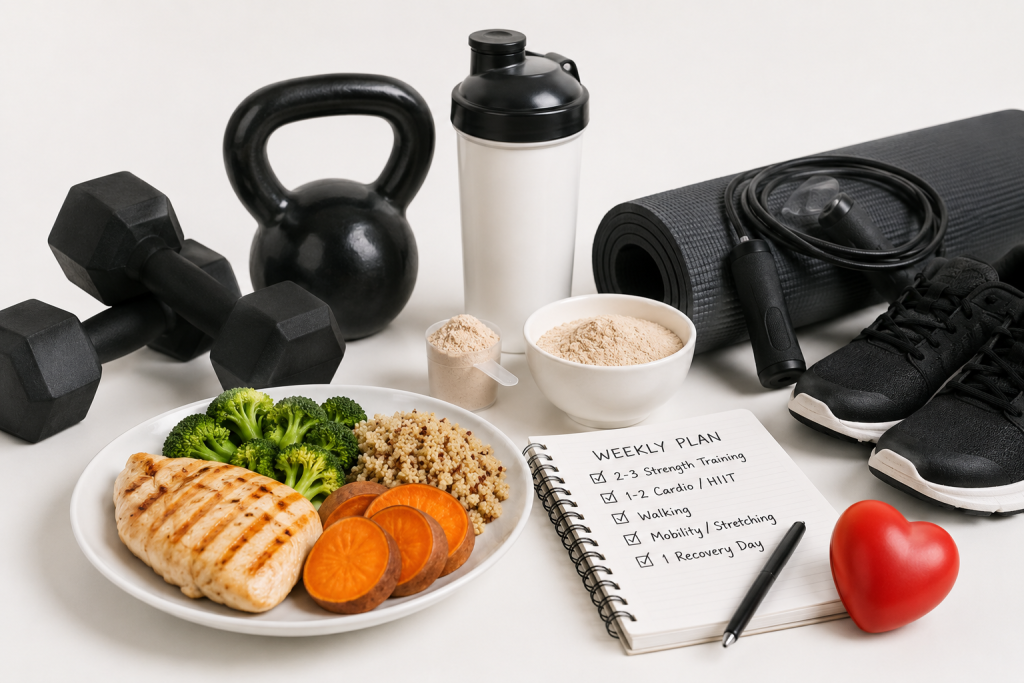
Nutrition and exercise work well together.
A protein rich diet can provide important building blocks for your body, while exercise helps you build strength, increase activity, and support your overall fitness.
You do not necessarily need long workouts. The best program is one that matches your current fitness level and that you can follow consistently.
For example, a weekly routine could include:
-
- 2–3 strength-training sessions
-
- 1–2 cardio or HIIT sessions
-
- Regular walking
-
- Mobility or stretching
-
- At least one recovery day
If you prefer structured guidance, Weight Loss Personal Training can provide accountability and help you learn how to perform exercises safely.
At a facility such as Elite Spartans, someone working toward a weight-loss goal could combine nutrition habits with strength training, group workouts, conditioning, and personal coaching.
What Are Some of the Best Weight Loss Workouts?
There is no single workout that everyone needs to perform to lose weight.
The Best Weight Loss Workouts are usually the ones you can perform consistently while gradually increasing your fitness level.
Some useful options include:
Strength Training
Strength exercises can help you build and maintain muscle while increasing your overall physical activity.
Exercises can include squats, lunges, presses, rows, deadlifts, and other movements.
Kettlebell Training
Kettlebell Exercises For Weight Loss can combine strength and conditioning in a relatively short workout.
Swings, goblet squats, cleans, presses, and carries can challenge multiple muscle groups.
If you want a practical workout to add to your routine, check out this Full-Body Kettlebell Workout for Fat Loss for more exercise ideas.
Bootcamp Training
Weight Loss Bootcamps can be a good option if you enjoy exercising with other people.
A typical session may combine strength exercises, cardio intervals, body-weight movements, and conditioning drills.
If you want to understand what exercises are commonly included in these sessions, take a look at Best Exercises in Weight Loss Bootcamps.
Group Fitness
If you enjoy social workouts, Workout Classes San Jose can give you a scheduled time to exercise while providing a group environment.
Options can include strength, HIIT, bootcamp, circuit training, and other formats.
Can Personal Training Help With Weight Loss?
Yes, working with a qualified trainer can make exercise more structured.
A Fat Loss Personal Trainer can help you choose exercises based on your current fitness level, teach proper technique, and gradually adjust your workouts as you become stronger.
Weight Loss Personal Training can also provide accountability. Instead of wondering what to do every time you enter a gym, you have a planned session to follow.
For people in the San Jose area, Personal Training In San Jose can be particularly useful if you prefer individualized coaching instead of a group environment.
For example, Elite Spartans offers group bootcamp workouts that combine strength, conditioning, and full-body movements in a structured training environment.
What About Gym Classes for Weight Loss?
Some people find it easier to stay consistent when their workouts are scheduled.
Gym Classes To Lose Weight may include:
-
- HIIT
-
- Bootcamp
-
- Circuit training
-
- Strength classes
-
- Kettlebell workouts
-
- Conditioning sessions
-
- Group fitness
The biggest benefit may simply be consistency. When you know your class starts at a specific time, it can be easier to make exercise part of your weekly schedule.
If you are comparing the Best Fitness Classes In San Jose, look for a gym that offers different training styles so you can find something you genuinely enjoy.
The Best Gym For Weight Loss is not necessarily the one with the most equipment. It is a facility where you feel comfortable, have access to suitable workouts, and can maintain a consistent routine.
If you are interested in a group-based approach, you can also learn more about Lose Weight With Bootcamp Classes in San Jose and how bootcamp-style workouts can fit into a regular fitness routine.
What About Fat Loss Programs?
A structured Fat Loss Program San Jose may combine exercise, coaching, accountability, and lifestyle guidance.
However, be careful with programs promising extremely fast results.
Sustainable fat loss generally takes time. Your progress can also fluctuate because of water retention, food intake, sleep, stress, and other factors.
Instead of asking, “How quickly can I lose 20 pounds?” ask:
-
- Can I follow this eating pattern for several months?
-
- Am I getting enough protein?
-
- Am I exercising consistently?
-
- Am I sleeping well?
-
- Can I maintain my results afterward?
Those questions lead to a much more sustainable approach.
Can You Calculate Weight Loss in Percentage?
Yes.
A simple formula is:
Weight loss percentage = (Starting weight − Current weight) ÷ Starting weight × 100
For example, if someone starts at 90 kg and later weighs 85 kg:
(90 − 85) ÷ 90 × 100 = 5.6%
If you want to calculate your own progress quickly, you can use this Weight Loss Percentage Calculator to see your weight loss as a percentage.
Remember that scale weight is only one measurement. Waist circumference, fitness level, strength, energy, and how your clothes fit can also provide useful information.
What About Weight Loss and Fatty Liver Disease?
If you are specifically interested in weight loss for fatty liver disease, it is important to speak with your doctor or a registered dietitian.
Weight management can be an important part of managing fatty liver disease, but your nutrition plan should be personalized to your health status.
Avoid assuming that a high-protein diet alone will treat a medical condition.
If you have a diagnosed health condition, get professional medical advice before making major dietary changes.
Does Creatine Help With Weight Loss?
You may also wonder, does creatine help with weight loss?
Creatine is primarily used to support strength and exercise performance. It is not a fat-burning supplement.
Some people may experience an increase in body weight after starting creatine because of increased water stored in muscle. That does not necessarily mean increased body fat.
If you are considering creatine, discuss whether it is appropriate for you with a qualified healthcare or sports nutrition professional.
How to Make This 7-Day Plan Easier to Follow
The biggest mistake people make is creating a diet that looks perfect on paper but is impossible to maintain.
Keep your routine simple.
1. Prepare Protein in Advance
Cook chicken, fish, tofu, eggs, or other protein sources ahead of time.
2. Keep Easy Snacks Available
Greek yogurt, fruit, boiled eggs, cottage cheese, and nuts are easy options.
3. Do Not Eliminate Carbohydrates
Rice, potatoes, oats, fruit, and whole grains can fit into a weight-loss diet. Portion size and your overall calorie intake matter.
4. Drink Enough Water
Sometimes thirst can feel similar to hunger. Keep water available throughout the day.
5. Focus on Your Weekly Pattern
One high-calorie meal does not destroy your progress. Return to your normal routine at the next meal.
6. Combine Nutrition With Movement
A protein-focused diet works best as part of an overall healthy lifestyle that includes regular activity and adequate recovery.
Your Next Step: Build a Routine You Can Actually Maintain
A successful weight-loss journey is rarely about finding one “perfect” food or workout. It is about creating a routine that you can follow consistently.
Start with balanced, protein-rich meals, regular movement, strength training, and realistic goals. If you prefer additional accountability, Weight Loss Personal Training can help give your workouts structure.
Whether you choose personal training, Workout Classes San Jose, Weight Loss Bootcamps, or independent workouts, consistency is more important than trying to do everything at once.
If you are looking for the best gym for weight loss in San Jose, Elite Spartans is a strong option to consider. Its programs combine personal training, weight-loss workouts, strength training, bootcamp classes, and nutritional guidance to help members build sustainable fitness habits.